
As a postlude to my write-up titled, “Wars and Festivals” that spoke of historical, mythological and individual battles, here is “Home Coming”.
We all know Diwali is the celebration of Lord Ram’s return to Ayodhya. After 14 years long tryst with resolving social issues of the day, facing the harsh forest life, taking back the empire that was deceitfully usurped within the family and waging a war with an Asur King to rescue his wife, he returned to his land triumphant, with newly developed skills, followers, learnings and stories to share. His journey stretched from North to South, and on his way, he touched the hearts of many. Grand décors, sumptuous feasts and open arms with glistened eyes welcomed him. Ayodhya was adorned with diyas to welcome its awaited and deserving king. The stories of his valour and victory spread far and wide as his coronation announced the dawn of Ram Rajya. The foundation of a new kind of leadership was laid – by a leader who ruled by being an example and who first practised and then preached.
Just like his challenging years in exile when he fought the mighty Lankesh (Ravana), almost losing his wife and beloved younger brother to death, the throne of a king offered challenges of a different kind. During his exile he had won an external battle before returning to his land, marking the celebration of Diwali. Now while he sat on the throne of Ayodhya as the Suryavanshi King of Aaryavrat, he faced an internal civil war. A war, where his praja raised fingers at his wife’s chastity. A war where no weapons could be helpful because the enemy was his own people.
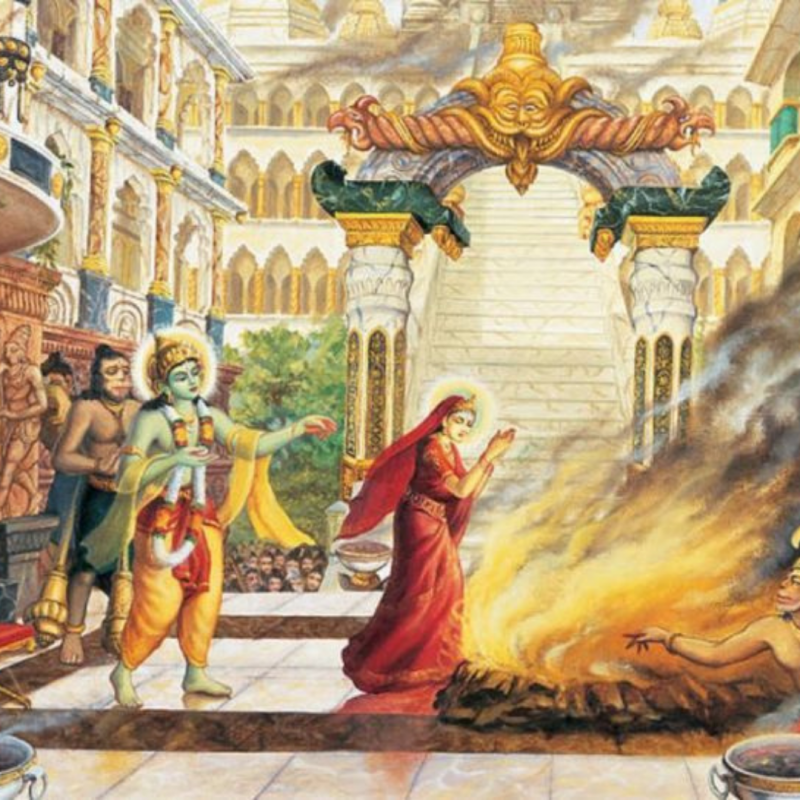
It wasn’t a battle for power or rule. It was a battle of truths, of ideologies. It was an inner battle between Ram and Ram, between Ram who was a husband and Ram who was a King. The trials of the Agni Prariksha and an assurance from the king went futile to convince the praja of Sita’s pious body. Ram reached the verge where he had to choose one side. To be a just husband or to be an ideal King. Unlike the battle fought on the ground, this was the tug of war he experienced within. His Kshatriya blood didn’t offer any respite. The only way to resolve this war was to choose. To choose one. Either be a husband or be a king. Sita’s uninformed boycott and abandonment into a forest announced his decision to be. He chose Ram Rajya over Sitapati Ram. He succeeded in resurrecting Ahilya but failed to stand beside Sita. For, the Rajya was at stake. The husband died, and the king lived.
When the war is internal like this one, and the victory is declared, how does one celebrate? Does one feel joyous or mourn? For either way, it’s one’s loss. After bleeding from the arrows of regrets, helplessness and doubts, when one accepts his choice, he reaches home. After the painful suffering of losing, knowing one’s personality flaws and bearing the scars that the decision left, one begins to travel through the feelings of returning home. When complete acceptance sets in, healing begins, and this marks the celebration as Home-Coming; a celebration of profound peace within. The inside finally lits-up, calm sets in, and Diwali is announced as ‘Home Coming’.