


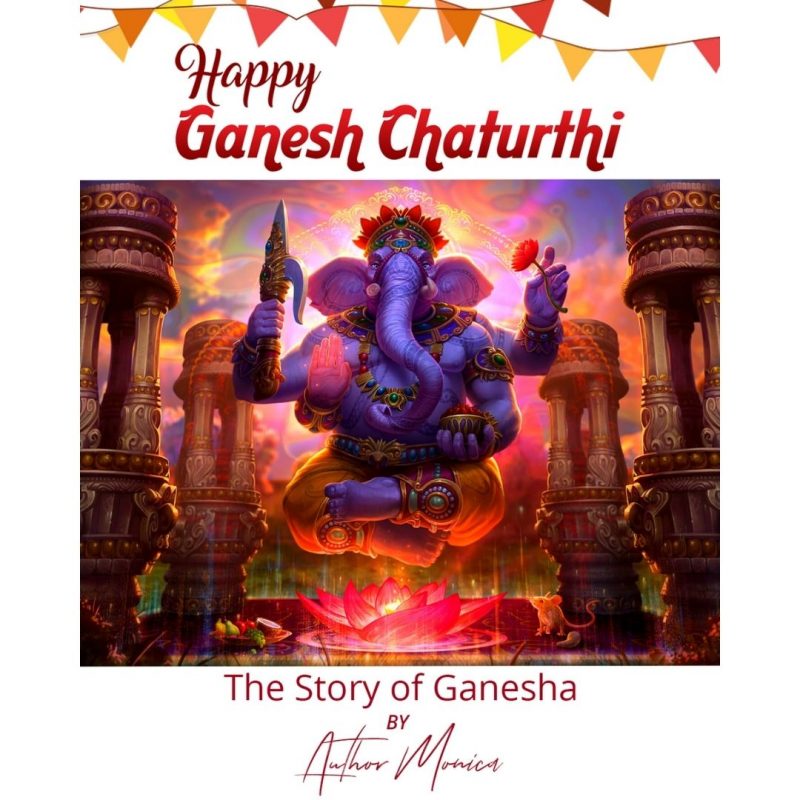
‘Vinayak Chaturthi’ or ‘Ganesh Chaturthi’ is celebrated on the fourth phase of the moon in the Bhadrapada month of the Hindu calendar. It marks the birth of God Ganesha, the younger of the two sons of Shiva and Parvati.
THE STORY OF GANESHA’S BIRTH
There is an interesting tale behind the birth of Ganesha. It’s a story of faith, of dutifulness. Once Mata Parvati wanted to bathe in a water body inside a cave, but the mouth of the cave was unguarded so she needed someone, someone her own, reliable to watch over the opening. To do so she collected some clay from the cave and moulded a sculptor of a boy. She then placed both her palms on it and with complete faith uttered words in its ears. Words, filled with feelings of belief and faith.
“You are my son! I have created you with my will and I give you my acceptance as a son. Please guard this entrance of the cave. Do not allow one to enter.”
Saying so, she went inside. Her words of belief and faith personified the sculptor and it turned into a son. Lord Shiva who was away at Mount Kailash meditating arrived at the cave to meet his wife Mata Parvati. He didn’t notice the tiny sculpted boy and stepped forward to enter the cave. The boy stopped him,
“Stop! You are not allowed to go inside. My mother is bathing and has asked not to permit anyone’s entry. So stay right where you are!”
Shiva was angered, firstly for having been stopped to see his wife and secondly for this boy announcing himself as Parvati’s son. With no further thought, he axed the boy’s head. Just then, Parvati emerged hearing the chaos. She was devastated to see her beheaded son. She narrated the whole story to Shiva with tears of anger. Lord Shiva immediately repented upon his short temper and instructed his Ganas (attendants) to fetch a head. Since they were in a forest, the Ganas found a dying elephant, seeking the animal’s permission they took its head. Shiva like Parvati, with utmost faith and words of acceptance, placed the head on his body and spoke,
“I wholehearted take you as my son and name you Ganesha, the elephant-headed. I bestow you with qualities of unsurpassable wisdom and sturdy temperament. You shall be summoned by devotees at the onset of new ventures and initiatives. Your presence shall keep the patrons reminded of your qualities, of how steadfastness and perseverance are helpful to clear the vighans (challenges) that fall on the path of action.”
In this manner, Lord Shiva and Mata Parvati birthed Lord Ganapati. Since then Lord Ganesh is worshipped before all Gods at the initiation of any enterprise.
SYMBOLISM
Lord Ganesh is portrayed as holding a sweet, a ladoo or modak, symbolic of the blessing of sweetness and affluence in life, the other hand is showing a palm, symbolic of reassurance that everything will eventually come to you. In another, he holds a lotus, representing Mother Nature and in the fourth holding his broken tusk symbolic of a weapon to pierce and dig into the problem. His vaahan is a rat, yet again symbolic of problem-solving ability. Just as a rat although not fast and ferocious is acclaimed for chipping away the problem by biting it away rigorously. The rat is also able to reach deep down into the ground and can reach high up the mountains. Considered as people’s God, he is aptly called ‘Ganesha’.
-Monica Gupta
Image Credits : andantonius